
The Best of 2025: South Asian Non Fiction

The year is just a few days from coming to an end, and so we bring you our final list of our 2025 favourites. The category this time is South Asian Non Fiction, and although there were many excellent releases, we’ve narrowed things down to a few that truly stood out. Check out the list as well as our earlier end of year round ups – global fiction, South Asian fiction, and global nonfiction, so you can add to your already burgeoning holiday reading pile.
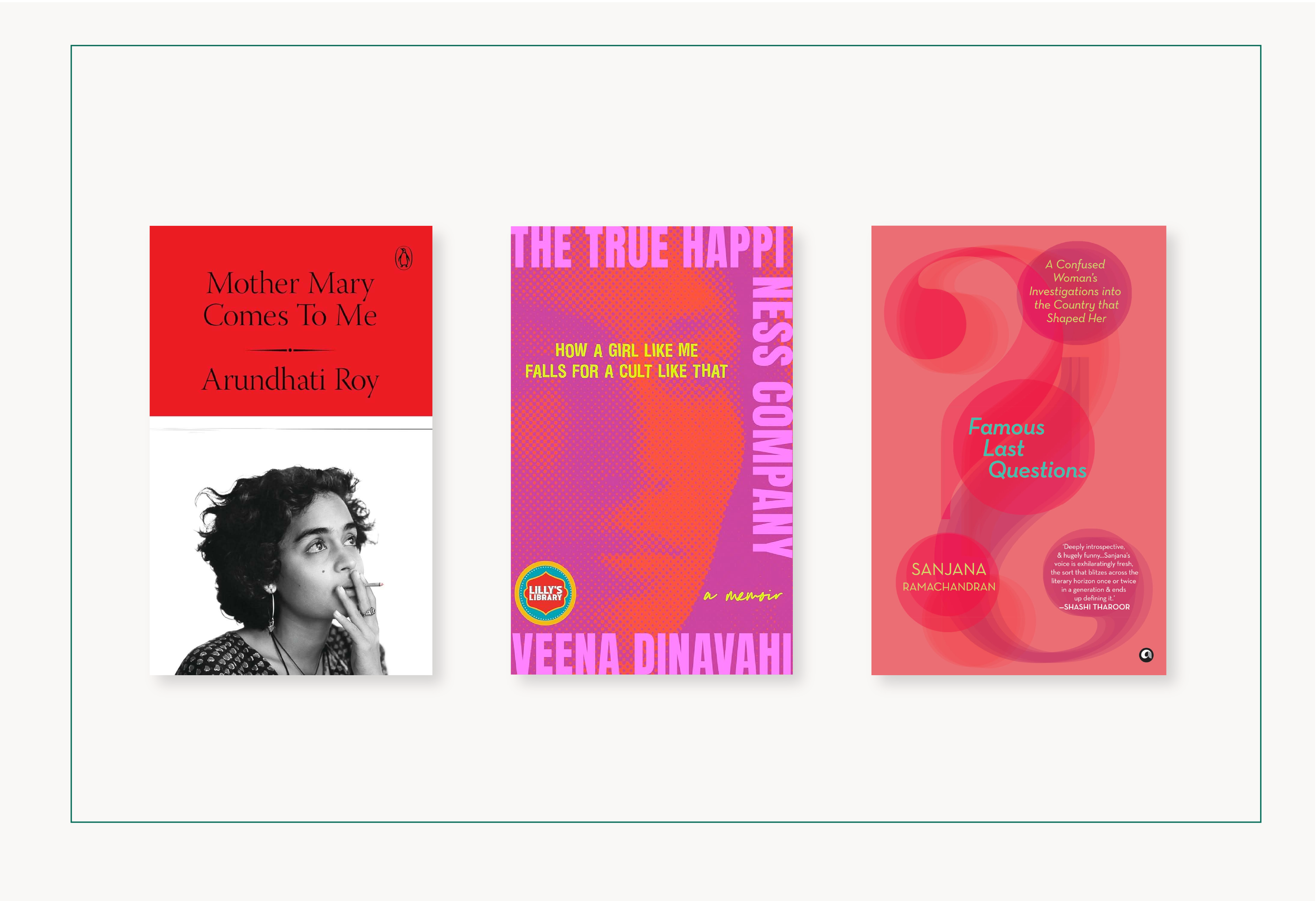
Arundhati Roy – Mother Mary Comes to Me
This list could only begin with Arundhati Roy’s raw, deeply moving and honest memoir. It’s not just the story of her complex relationship with her mother, Mary Roy, but a mapping of the ways in which it has shaped her life as a woman and a writer. It’s a beautiful, deeply personal tale written with verve, humour and insight, a book that’s destined to become a classic. From outsize characters who populated her childhood to the tribulations of having two unpredictable parents to the relationships and moral compass that make her arguably India’s most significant English-language writer of recent decades, this is essential reading, though you probably knew that.
Veena Dinavahi – The True Happiness Company
In this wrenching, darkly funny memoir, a young Indian American woman’s quest for mental health is derailed by a charismatic ‘alternative therapist’ who pulls her into his Mormon cult. Veena, high-achieving daughter of loving Indian immigrants, lives in a white American suburb like any other, apart from its unusually high suicide rate. She tries everything to cure her own depression, but nothing works. Then, one late-night on Google, her mom finds Bob Lyon—a sixty-year-old man in the backwoods of Georgia who calls himself ‘The True Happiness Company’ and says he can fix things. Mapping her journey into the cult and through the other side, this is a brave book from a promising new voice.
Sanjana Ramachandran – Famous Last Questions
India’s 90s kids grew up in an offline world before graduating to one that’s hyperconnected and seemingly always on fire. This generation’s psyche is riddled with qualms about identity, politics, capitalism, technology, relationships, selfhood, and what it means to live authentically—and Famous Last Questions is a sincere, observant, and funny attempt to understand that psyche via her own childhood trauma and sociopolitical context. What emerges is a heartfelt chronicle of the ‘modern’ Indian woman’s journey that plays with the boundaries of memoir, reportage, and research in a thoughtful, relatable manner.
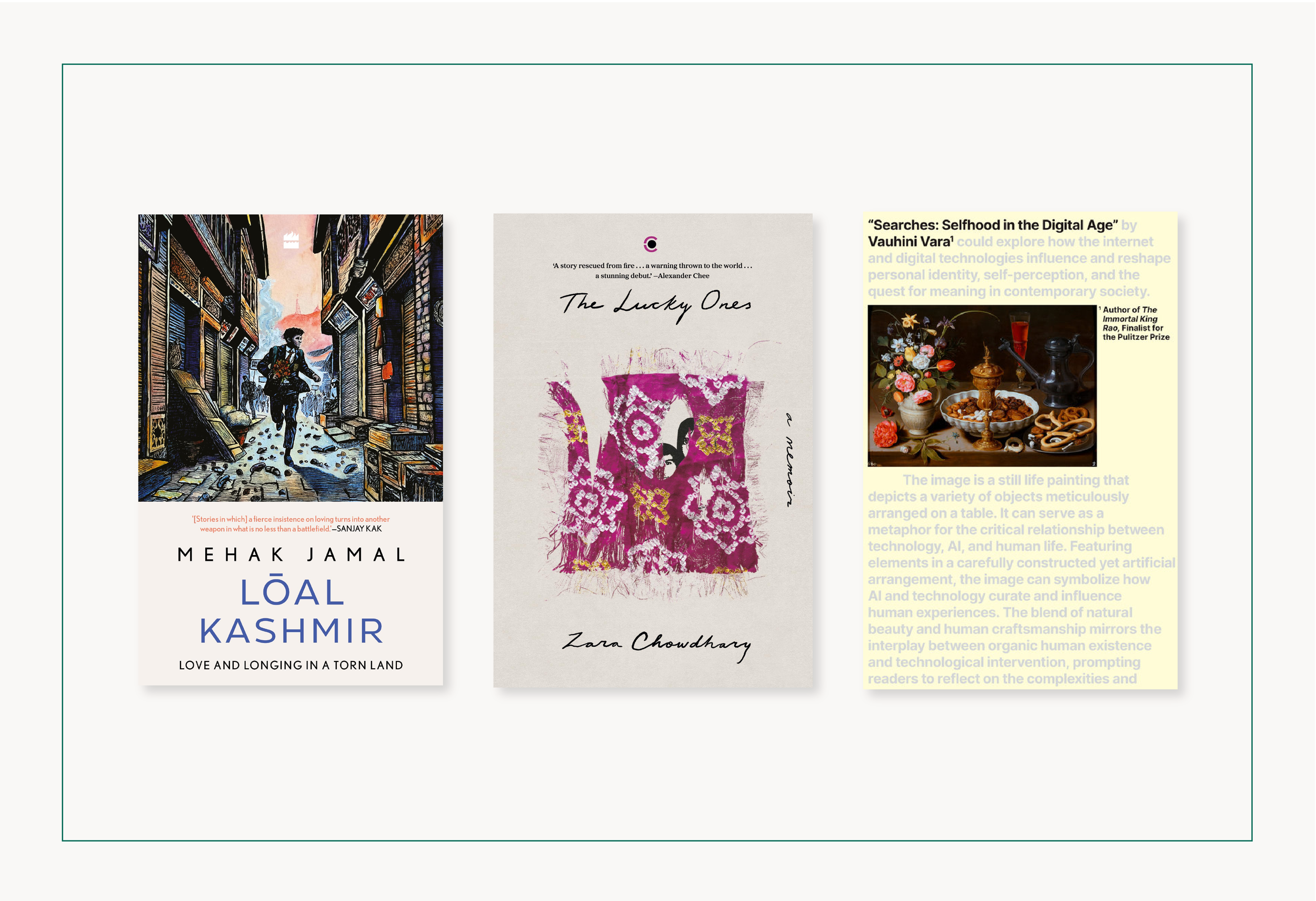
Mehak Jamal – Loal Kashmir
Loal, the Kashmiri word for love and affection, is the common thread running through all of the true-life tales in this collection. Juxtaposing the universality of longing and intimacy with the conflicted realities of life in Kashmir, this book focuses on the lived experiences of inhabitants. Javed, on his way to show off his love letter to a friend, gets caught in a crackdown; newlywed Zara waits to be reunited with her husband in America, her visa application flagged indefinitely; Sagar and Aalmeen plan moments of stolen time during the uncertainty of militancy. Filmmaker Mehak Jamal brings a deft touch to these tender and thought-provoking stories from Kashmir in her debut, providing a humanising perspective in dark times.
Zara Chowdhary – The Lucky Ones
Lyrical, intimate and important, Zara Chowdhary’s book weaves together the past and the present of her multigenerational Muslim family, juxtaposing the horrific violence of surviving the 2002 Gujarat riots with the more mundane violence of patriarchal Indian joint families at the dinner table. Through the stories of sisters, daughters, and mothers raising each other, Chowdhary shows how women hold this world together with their ability to forgive, find laughter, and offer grace even as the world they know, and their place in it, is falling apart. The Lucky Ones is a poetic remembrance of how a country’s promise of a multi-ethnic secular democracy can so easily dissolve.
Vauhini Vara – Searches: Selfhood in The Digital Age
In 2021, Vauhini Vara she used a predecessor of ChatGPT to write about her sister’s death, resulting in a viral essay that was more moving and disturbing than she could have imagined. The experience, revealing both the appeal and danger of corporate-owned language machines, led Vara to interrogate how technology has changed how she uses language. From exploring online chat rooms as a preteen, to using social media as the Wall Street Journal’s first Facebook reporter, to testing early versions of AI, she investigates this while interspersing the book with her own Google searches, Amazon reviews, and other raw material of internet life to bring to the fore deeply relevant questions for the techno-feudal reality we find ourselves in.
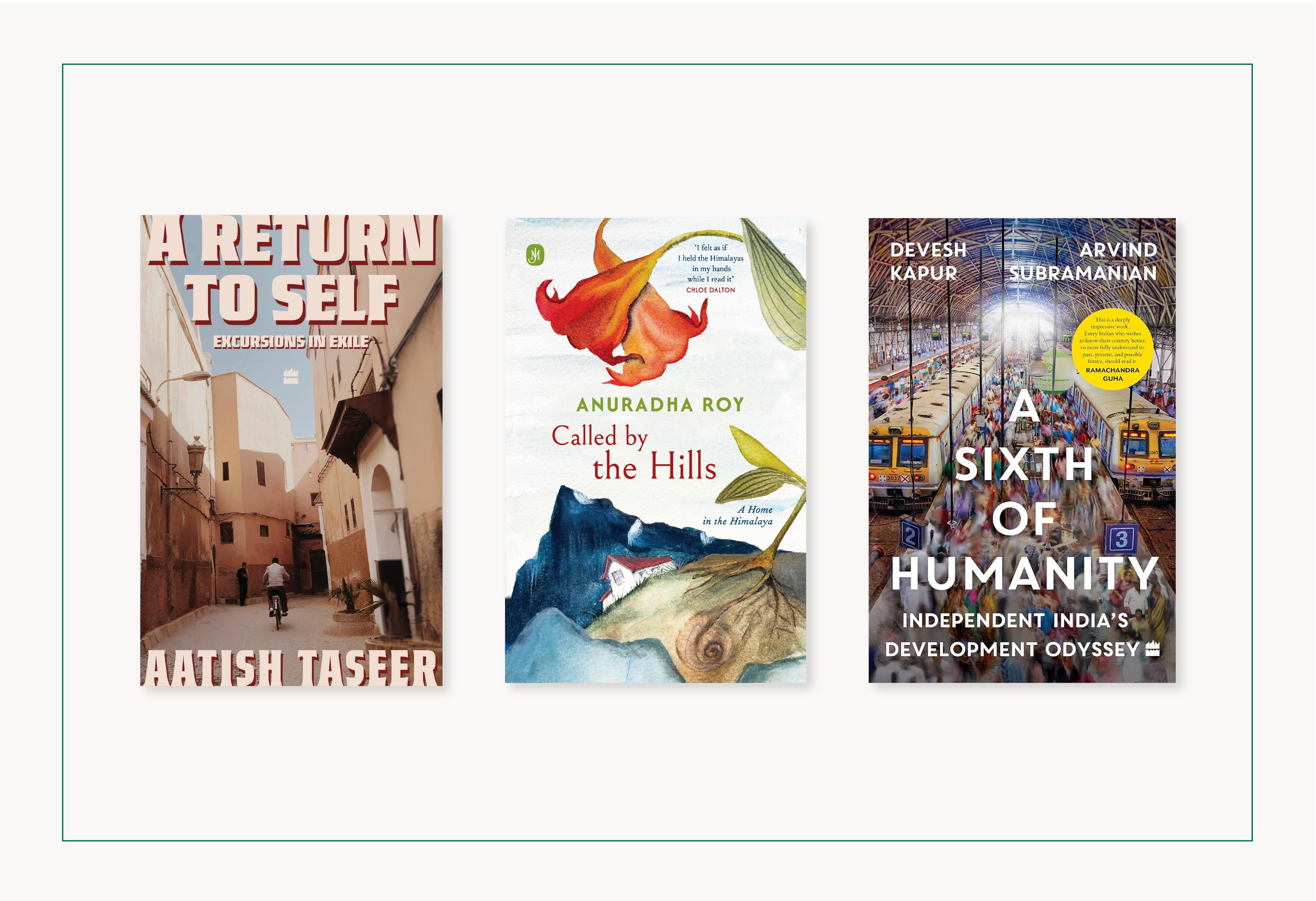
Aatish Taseer – A Return to Self
Back in 2019, backlash against an essay Aatish Taseer wrote led to the Indian government revoking his Overseas Citizenship of India. Forced into exile from the country where he spent his formative years, he found himself thinking about the ideas of belonging, identity, and culture. Shaped by his extensive travels, this collection of essays maps his journey since, traversing through Turkey, Uzbekistan, Morocco, Spain, Mexico, Sri Lanka, Bolivia, Mongolia and Iraq while examining how societies have morphed, cultures have been altered, traditions revised, and the idea of the preservation of something ‘pure’ has always been challenged by the human desire to wander.
Anuradha Roy – Called by The Hills
When novelist Anuradha Roy and her husband stumbled upon a derelict cottage in Ranikhet, they decided to make the hill station home. Fresh from the neon-lit publishing offices of Delhi, Roy, initially bemused by the gentle pace of mountain life, gradually became spellbound by the landscape, taken into the heart of the community, and adopted by several mountain dogs. Called By The Hills is an intimate portrait of this journey, of a profound transformation as Roy tries to rebuild the cottage, create a garden, and make the mountains home while bearing witness to the ways in which global warming and haphazard ‘development’ have altered the ecosystem there.
Devesh Kapur and Arvind Subramanian – A Sixth of Humanity
Academics and expert advisors with impeccable qualifications, Kapur and Subramanian have spent the past few years reviewing nearly eight decades of Indian history, politics, economics, and even literature, to produce a work that is both hugely broad as well as meticulously researched. In A Sixth of Humanity, the authors take on the audacious task of explaining how independent India attempted four simultaneous transformations – state building, economic development, social change, and nation-formation – under conditions of universal suffrage. A thorough, deeply detailed work that deserves to be widely read.