
The Best of 2025: Fiction
We’re continuing our round up of the best of the year gone by with a selection of eleven of our favourite 2025 novels. Following our lists of nonfiction and South Asian fiction, this one rounds up global novels that we particularly enjoyed. You’ve probably seen a few similar lists already, which is why we chose to leave out books like Flesh and Perfection, good as they were, in favour of a slightly more rarified selection that we hope will stand out.
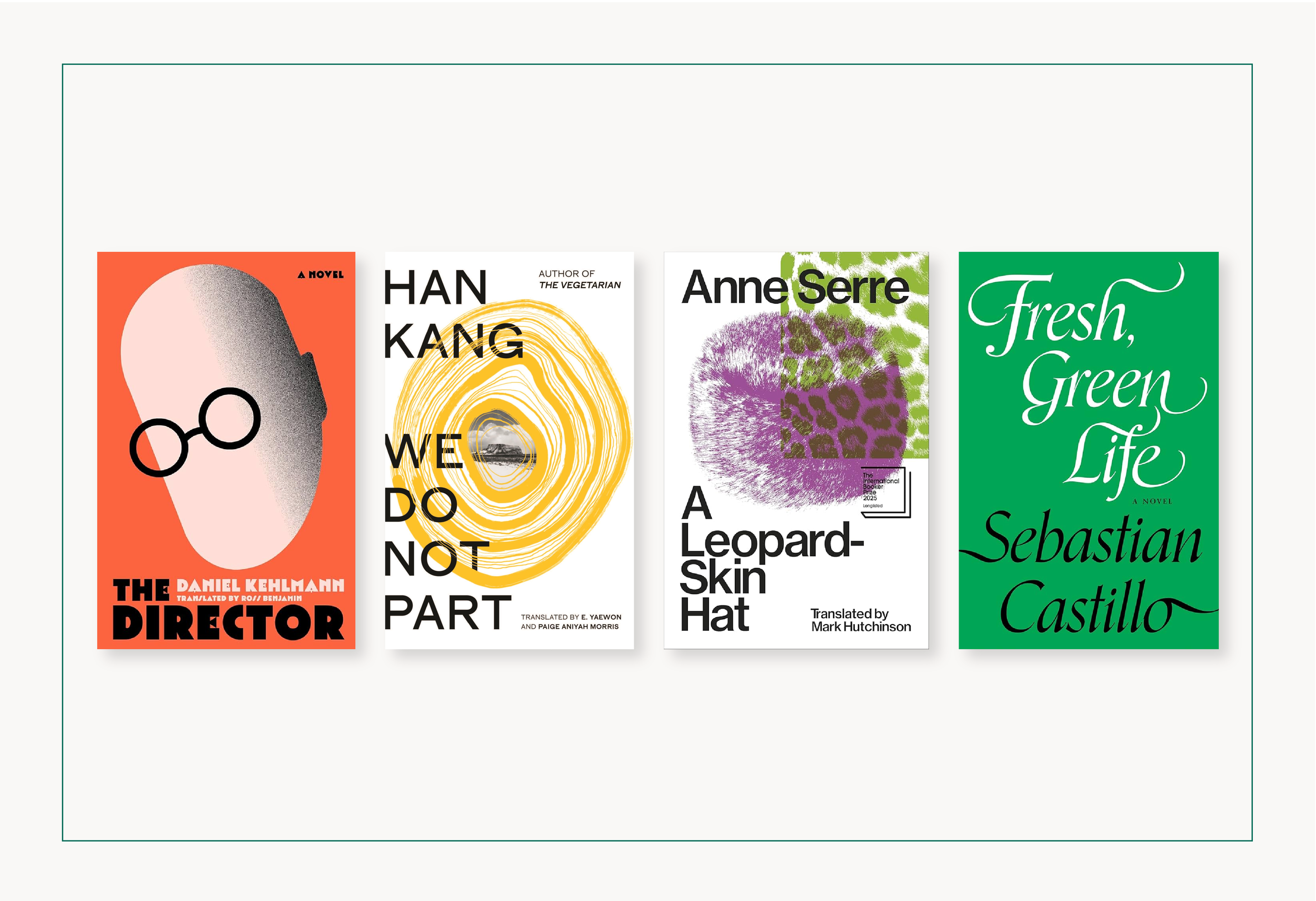
Daniel Kehlmann – The Director
Daniel Kehlmann's latest novel about art and power, beauty and barbarism, guilt and complicity in the face of history is a triumph. The Director is a powerful novel about G.W. Pabst, a real life Austrian film director from the century gone by who tries to escape to Hollywood in the Nazi era before being drawn back by personal and family circumstances. When Goebbels sees the potential for using the European film icon for his genius and makes big promises to Pabst, he is forced into a hopeless entanglement.
Han Kang – We Do Not Part
Blurring the boundaries between dream and reality, the latest book from Nobel winner Han Kang powerfully brings to light the lost voices of the past to save them from oblivion. Both a hymn to an enduring friendship and an argument for remembering, it is the story of profound love in the face of unspeakable pain, and a celebration of life, however fragile it might be. Kang’s intense, intricate narrative has the feel of a ghost story, forged from unsettling encounters with the spectres of South Korea’s turbulent past, revealing far more than what appears to be.
Anne Serre – Leopard Skin Hat
Hailed as a “masterpiece of simplicity, emotion and elegance,” this book came out years ago but was translated recently. It’s the story of an intense friendship between “the Narrator” and his close childhood friend, Fanny, who suffers from profound psychological disorders. A series of scenes paints the portrait of a tormented young woman, as well as the narrator’s loving and anguished attachment to her. Writing in the wake of her sister’s death, Anne Serre poignantly depicts the back and forth between hope and despair while calling into question the very form of the novel.
Sebastian Castillo – Fresh, Green Life
After resigning from an adjunct teaching position, narrator Sebastian Castillo, who shares a name with our author, Sebastian Castillo, and also with a translated Spanish writer, Sebastián Castillo, resolves to spend an entire year without speaking, passing the time by exercising daily and watching self-improvement videos. But come New Year’s Eve, Sebastian will break his silence by accepting an invitation to the home of a former professor for a reunion, a decade after graduating. An invitation that would’ve been ignored if not for the promised attendance of Maria, Sebastian’s former classmate and love interest. What follows is a series of unexpected twists and meditations on literature, academia, and philosophy: a trek through the past that forecasts a mediocre future, a book both deeply enjoyable and enjoyably deep.
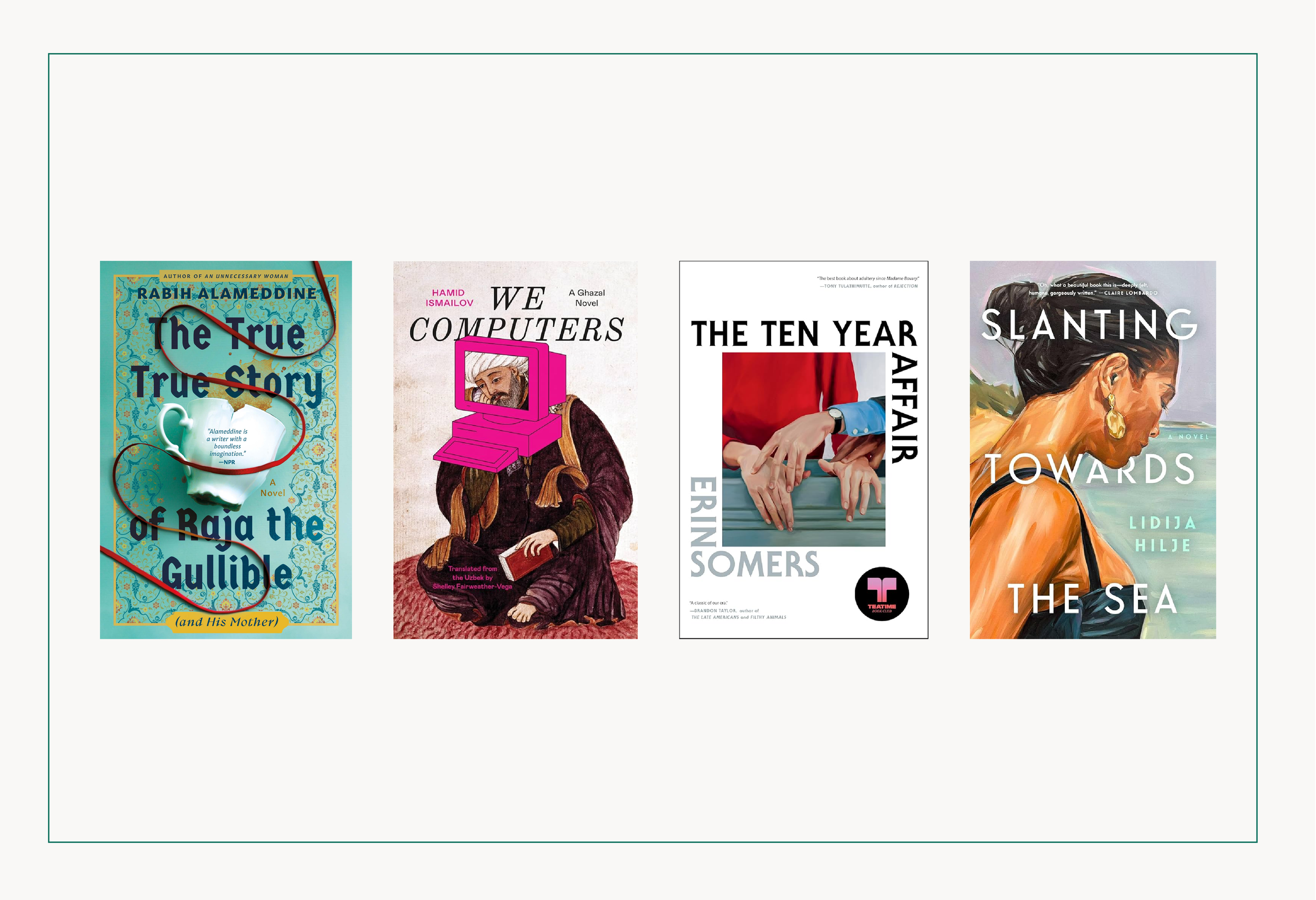
Rabih Alameddine – The True True Story of Raja the Gullible
This book – winner of the 2025 National Book Award for fiction – feels like sitting down with an old friend who is at once hilarious and brilliant. It’s an amusing and beautifully written portrait of sixty-three-year-old Raja and his mother Zalfa, who live side-by-side in a tiny Beirut apartment. A beloved high school philosophy teacher and ‘the neighborhood homosexual’, Raja relishes books, meditative walks and solitude. His octogenarian mother, on the other hand, demands to know every detail of Raja’s work life and love life, boundaries be damned. Very funny, charming, and masterful, Alameddine continues to show he is one of the most brilliant, underrated writers around.
Hamid Ismailov – We Computers
Though it was written before the rise of current AI, Hamid Ismailov’s ‘ghazal novel’, translated from the Uzbek by Shelley Fairweather-Vega, pretends to be written by a computer that tells variations of stories about its creator, a French poet called Jon-Perse. Set in the 1980s, Jon-Perse is using his newfound device to generate poems and (known fragments of) the life of Hafez, one of the most beloved Iranian poets. His ghazals are referenced throughout the novel, as is Sufi poetry, an alter ego of the author who is Jon-Perse’s best friend, many great Eastern and Western thinkers, and much more. Though occasionally frustrating, this is an ambitious, powerful novel that is worth the effort.
Erin Somers – The Ten Year Affair
When Cora meets Sam at a baby group in their small town, the chemistry between them is instant and undeniable. But both are happily married, and neither is the type to cheat. So as their lives intertwine and the tension between them heightens, Cora turns to her imagination: in her head, she and Sam pursue their feelings; in reality, they resist. When the boundaries grow increasingly blurred, she must decide what truly matters. Razor-sharp, exhilaratingly honest and acerbically funny, The Ten Year Affair explores family life, fidelity and the roads not taken with a sharp eye.
Lidija Hilje – Slanting Towards the Sea
Set against the Croatian coastline, Slanting Towards the Sea is a hugely promising debut about the fragile nature of potential and love. In early 2000s Croatia, the novel follows the tale of ex-lovers Ivona and Vlaho. A decade after first falling in love as students in Zagreb, they’re divorced – but their lives in coastal Zadar remain as closely intertwined as ever. Ivona is close friends with Vlaho’s new wife, and a regular fixture at family gatherings with the couple’s young children. It’s a dynamic that unexpectedly works – until Ivona gets a new boyfriend, bringing up long-buried resentments and forcing a reckoning.
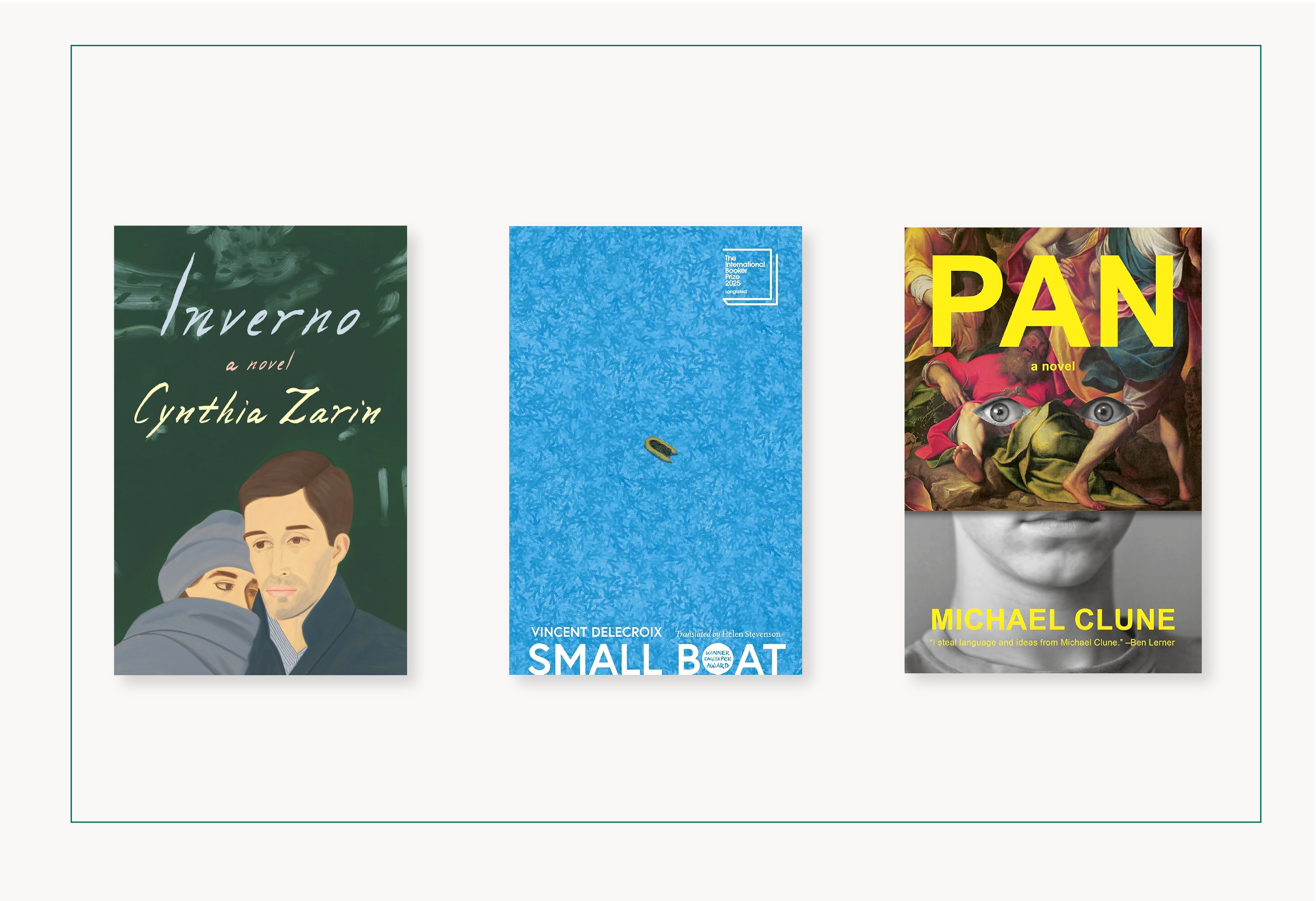
Michael Clune – Pan
Thrilling and cerebral, Pan is a new twisted coming-of-age tale by Guggenheim fellow and literary scholar Michael Clune, whose memoir of heroin addiction, White Out, earned him a cult readership. Now, in what has been called ‘the great novel of our age of anxiety’, Clune drops us inside the human psyche with the story of Nicholas. Fifteen, living with his father in the bleak Chicago suburbs, he begins to get panic attacks and becomes convinced that the Greek god Pan is trapped in his body. As the edges of consciousness blur, Clune subverts mental illness, the coming-of-age novel and more with his electric prose.
Cynthia Zarin – Inverno
In Inverno, Caroline is sitting on a bench in Central Park as it begins to snow. She’s waiting for a call from Alastair, a ‘boy’ she’s known for over thirty years. He’s not the love of her life, but she’s always had strong, confusing feelings about him as they drift in and out of each other’s lives. As she sits and waits for his call, much of her life and varied reflections pass through her mind. The debut novel from Zarin, an accomplished poet and New Yorker writer, is an elliptical capturing of life within a moment, a slim book full of depth and character.
Vincent Delacroix – Small Boat
In November 2021, an inflatable dinghy carrying migrants from France to the United Kingdom capsized in the Channel, causing the death of 27 people on board. Despite numerous calls for help, the French authorities wrongly told the migrants they were in British waters. By the time rescue vessels arrived on the scene, all but two of the migrants had died. The narrator of Delecroix's fictional account of these real world events is the woman who took the calls. Accused of failing in her duty, she refuses to be held more responsible than the sea, than the war, than the crises behind these tragedies? A shocking, moral tale that packs a punch, Small Boat may not be pleasant reading but it’s vital.