
A New Cycle
Pooja Jain
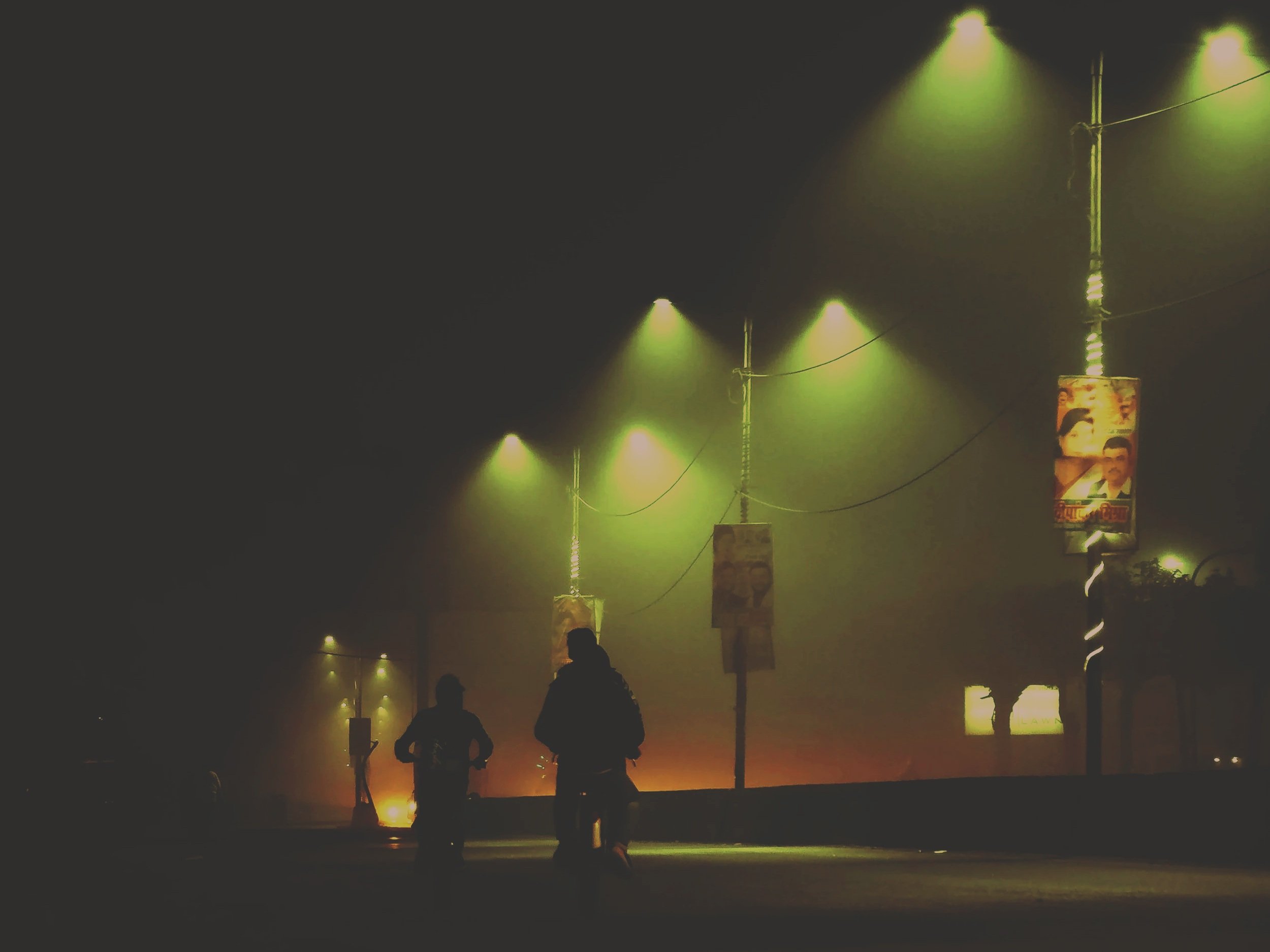
I love taking up new hobbies every few months. There’s something about the thrill of diving into something new that breaks the monotony of adulting for me. My fitness journey has been no different. Yoga, skipping rope, walks in the park, dancing to a YouTube tutorial, swimming – I’ve dabbled in them all. I wanted something new.
Getting a bicycle seemed like a good idea (at least in the months when hazardous air quality is not choking Delhi!). I used to cycle a lot when I was young. It felt refreshing to go back to it. My parents’ first reaction was, “Arre, you already drive a car, what do you need a cycle for?” The choti bachchi ho kya remained unsaid.
It was as if having graduated from a cycle to car, taking up cycling again was like moving backward in life. It only made sense to my parents when I told them this was a part of my new exercise routine. If I had known then what I know now, I would have presented my parents with a longer list of reasons why I must cycle.
I didn't expect a cycle to change how I experience my city — but it did.
*
Within a month, I fell in love with the experience of being on the road, cycling. Yes, in spite of the traffic and their relentless honking. What started as a fitness habit now also became an alternate way to run errands – I didn’t need to take my car out for everything. More than the cost-effectiveness, I was drawn towards how cycling brought down my carbon footprint without making a huge lifestyle sacrifice.
I started noticing my neighbourhood more closely — street vendors setting up their stalls in the morning, the trees, flowers blooming in Delhi’s spring. It was a practice in mindfulness. I spotted palash trees. Their fiery blossoms bursting in vibrant reds and oranges, between the sea of green. I stopped to take a picture that greets me every time I unlock my phone. Often, I stop to admire the sunset.
The lines of where I ended and the world around me began to blur. I was a part of it. It was a part of me. Driving in a car just no longer seemed to cut it.
I was eager to find more excuses to cycle. I rode to pick up groceries. Went for a quick haircut. Travelled to meet family and friends who lived nearby — zipping through traffic felt efficient and oddly satisfying.
*
My favourite tale of casually showing up on a cycle has to be the time I went to vote. The police officer stationed outside the polling booth kindly offered to keep an eye on my bike while I cast my vote.
Voting had always been a family affair – we either drove in a car or walked to the polling booth. This time, pedalling there alone felt radical. Liberating. Something about showing up on a cycle — no car, no companion — made the act feel more intentional, more personal.
And it wasn’t just how cycling made me feel about myself. I started chatting about it with my friends and family. It kindled conversations in the most unexpected places. Once, as I was waiting for the light to turn green, an autowallah asked me how much I bought the cycle for. I like to imagine he asked because he wanted to get one for his child. I like to imagine the child is cycling, even as I write this.
At the salon, one of the hairdressers and I talked about how hard it is to find time for exercise, how getting a cycle felt like a creative workaround. “It’s also easier to park than a car!” one of her colleagues chimed in. I tried renting cycles when I travelled to other cities. Pedalling my way through serpentine mountain roads surrounded by pine trees in Bir was my best experience so far.
I discovered Delhi By Cycle, a community that hosts cycling tours across the city. The thrill I felt that day when we stopped traffic so fifteen-odd cycles could cross the road on their way to casual sightseeing still lives with me. I also found out about Fit India Sundays on Cycle, a national fitness movement launched by the Ministry of Youth Affairs and Sports last year.
With every experience, cycling brought new meaning to my life. Until winter came and I had to lock it up, waiting with bated breath for Delhi air to become breathable again.
*
Since I started cycling, whenever I was on the road, I’d feel a sudden excitement and a childlike urge to gleefully wave at other cyclists. I felt I was spotting more cyclists now than I had ever before. It made sense, since I was one of them now. But as my attention shifted from the cycle to the rider, my excitement felt disconcerting. There were patterns I couldn’t ignore. It was a revelation.
Men taking their children to school. Young boys racing. Men, who seemed to look like daily wage workers, riding their simple cycle. Older men, possibly in their fifties, racing past me on their sports bikes with gears and helmets.
Men. Men. Men. My heart sank. Where were the women?
Cycling, it turns out, like so many other public activities, carries an unspoken gender divide.
As always, when the world makes me feel like being a woman is a limitation, I turn to the sisterhood of solidarity. I began reading about the history of women cycling in India. A Google search took me back in time to the Tamil Nadu of 1990s. What started as a literacy campaign in Pudukkottai became a powerful social movement for women’s freedom and mobility. How? More than 1,00,000 women had started cycling.
Another fact that moved me deeply came from a piece in the BBC about the increase in the number of girls cycling to school in rural India. ‘A silent cycling revolution’, the article called it. I wondered why the challenges facing girls’ education were public knowledge, but this glimmer of hope only showed up in a carefully worded search.
I don’t ride alone anymore. Riding with me are many young girls and women across time and space, who are challenging social norms, pushing the limits of ‘womanly decorum’, and occupying space that women are so often ill-afforded – all via the simple act of cycling.
*
Even as I found solidarity with women who were reclaiming public space, I found another truth staring me in the face. On Delhi’s roads, freedom looked different depending on who you were. It’s not just your gender, it’s also your class and caste.
My privilege allowed cycling to be recreational for me. But when I looked at my fellow cyclists on the roads of Delhi – I realised that wasn’t the case for the majority of them. Most of the men I saw cycling were blue-collar workers on their commute or dropping their kids to school.
One day around nine in the evening, I noticed four men cycling together, their tiffins hanging on the handles. They looked like daily-wage workers, probably returning home from a long day’s work. Two of them had friends — maybe fellow workers — riding pillion. It made me smile, reminded me of my college days when my friends and I would walk together to the metro station, chatting. I thought that’s what was happening here too — friends dropping friends home. Innocent.
But weeks later, I stumbled upon a news story that talked about how many cyclists from low-income communities prefer to commute to work in groups so they can help each other if they run into trouble. Some of the road rage and violence reports I read online were horrifying. Cycling in a group wasn’t camaraderie; it was survival.
Unlike them, my privilege shielded me from harassment by car drivers and motorists. If I were to ever witness such violence, let alone have the misfortune to experience it myself, I don’t think I would ever be able to touch a cycle again. The image I once found comforting, now felt heavier, marred by the realisation that your experience of cycling in the city is shaped by the identity you carry.
*
One challenge that seems universal is the lack of cycle-friendly infrastructure in the Indian cities. It doesn’t take long to realise that my city, Delhi, does not, after all, like for its people to cycle. It simply isn’t designed for it.
Particularly in the peak pollution months, cycling outdoors may probably do more harm to your body than good. What could be used as a policy measure or promoted as a great step in combatting the pollution crisis in the city, is not safe to do given how polluted the air is. How ironic.
Then there are the year-round challenges. I struggle to find safe places to cycle in my neighbourhood. Roads are maxed out with traffic. Service lanes are uneven, sprinkled with potholes, and adorned with parked cars. Roads that have none of these issues, are often poorly lit, making them extremely unsafe in the evenings. Because of the lack of basic infrastructure, cyclists in Delhi face a 40 times higher threat to life than car drivers.
Knowing what I know now, cycling is no longer just a personal preference. It is a political act. A quiet rebellion against a city that isn’t designed for me, a woman, a cyclist. Navigating Delhi’s streets on two motor-less wheels is an assertion of my right to public space, clean air, and a push against the unspoken social norms that dictate where people belong. I didn’t expect the simple, seemingly innocent act of cycling to stir up all these feelings.
Cycling is clearly not just a passing hobby anymore. Since I picked it up over the summer, it’s changed how I view and experience the city. It offers far more than meets the eye. The thrill of a new experience, yes. But also a quiet unraveling. It nudges me to pay attention to things I never paused to see before. It teaches me to connect dots that I didn’t think were related. It offers me small truths about who I am and the life I’m living.
And of course, it gives me so many stories ‘from the time I was into cycling’ that may well stay forever. Let me sign off by telling you about the time my pants got stuck in the cycle chain. I felt myself stuck, in a moment of panic. I wondered if I should call my father for help when I heard the aunty at the panwari stall call out to the traffic police officer standing nearby. “Police bhai! Beti ki madad kar do!” They untangled my pants from the chain and made sure I was unhurt. Delhi roads are a mind-boggling paradox, where chaos and kindness travel together.
I hope the city becomes more welcoming to the kind of transport that can solve so many of its problems. I hope more women make the choice I did, and more people become aware of the benefits cycling can have. I hope we meet someday on the roads of Delhi, happily pedaling past each other. When we do, I promise I will wave.
***
About the Author
Pooja Jain is a reader and a writer at heart. She has been fascinated by stories for as long as she can remember. This love for words on a page and making sense of the world through them led her to pursue a Master’s in English from Delhi University and, eventually, to a career in narrative building. She works with ComMutiny - The Youth Collective, shaping narratives about youth leadership.